
Designed cloud storage around stringent Department of Defense controls.
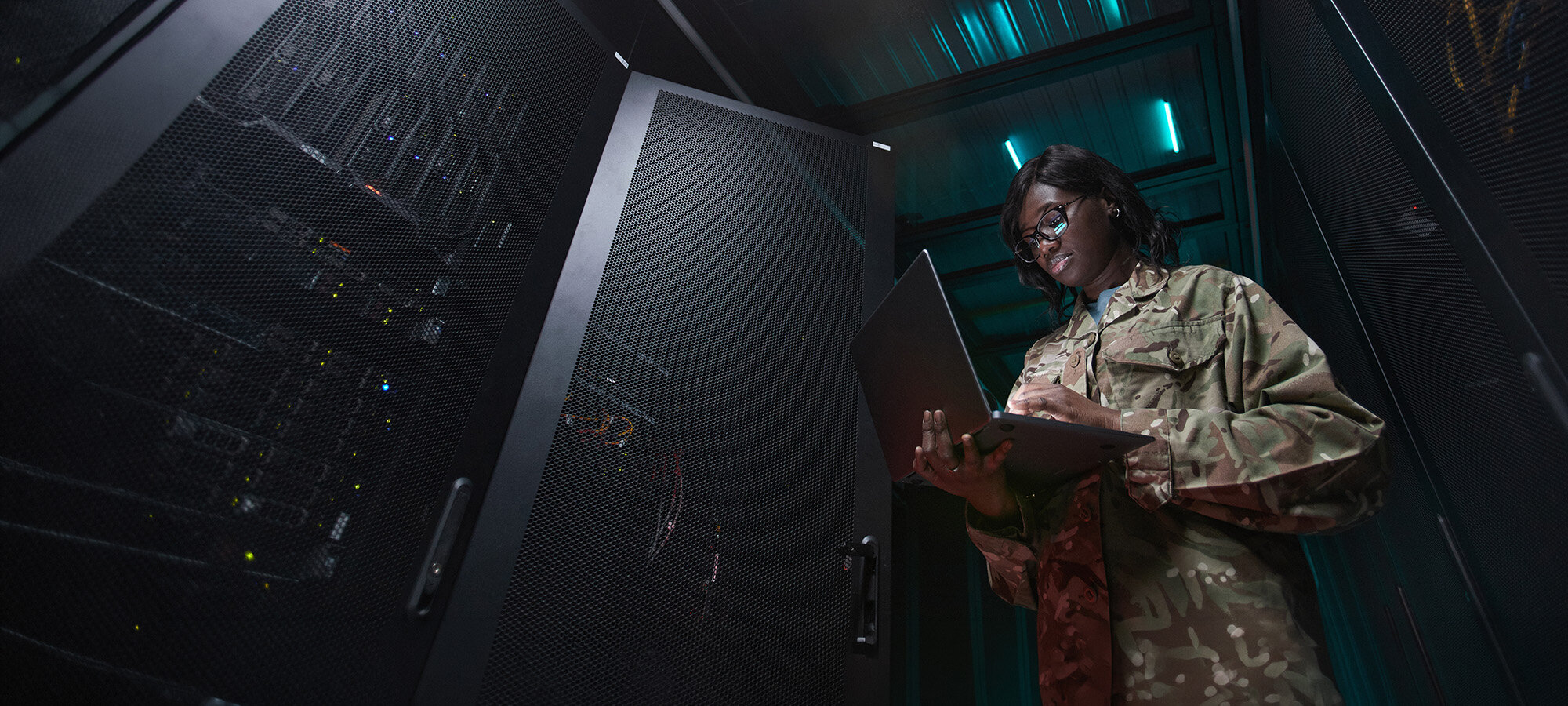
Classified Cloud Storage for National Security
Secure classified cloud capacity with familiar access.
Client context
The work begins with the operating reality.
Client
A federal client within the Department of Defense operating classified workloads across separate legacy networks.
EngagementA Department of Defense organization created secure cloud capacity for classified cold data while preserving familiar access and strict separation.
The challenge
What had to change
Disparate networks each carried their own hardware and backup systems and were approaching capacity. Server-room space, cooling, and power constraints limited the ability to expand locally.
The organization also held five to ten years of operational data that still needed secure, accessible storage under demanding national-security controls.
The BlueAlly solution
How the work came together
BlueAlly and NetApp designed a multi-tenant architecture around NetApp Cloud Volumes ONTAP, secure storage partitions, disaster recovery, and continuous-operation capability.
The platform moved cold data to AWS or Azure while maintaining SMB and NFS compatibility, deduplication, multi-region replication, and the access patterns users already understood.
The results
What changed
The client gained scalable classified storage without adding pressure to local facilities. Authorized users continued accessing cold data through familiar workflows.
Storage efficiency, segregation, recovery, and replication became part of one secure cloud design that met the Department of Defense operating requirements.
Outcome highlights
What the client gained.
Relieved capacity, space, power, and cooling pressure.
Preserved SMB and NFS workflows for authorized users.
Built recovery and multi-region replication into the platform.
Related work
More outcomes in Cloud & Infrastructure
Cloud & Infrastructure
Data Center Consolidation with Dell PowerStore
The client gained a larger, resilient platform that met both the immediate consolidation need and the newly surfaced continuity requirement.
Read the story
Cloud & Infrastructure
Cloud Migration to Secure Government Infrastructure
The organization retired legacy technology, restored access to current security support, improved collaboration, and created a more reliable operating foundation.
Read the story
Cloud & Infrastructure
A Retail Manufacturer Recovers from Ransomware in 10 Days
The business restored profitable operations in 10 days and retained the recovery platform for continued use.
Read the storyHave a similar constraint?
We can start with the current state, the outcome, and the limits around time, risk, and budget.