
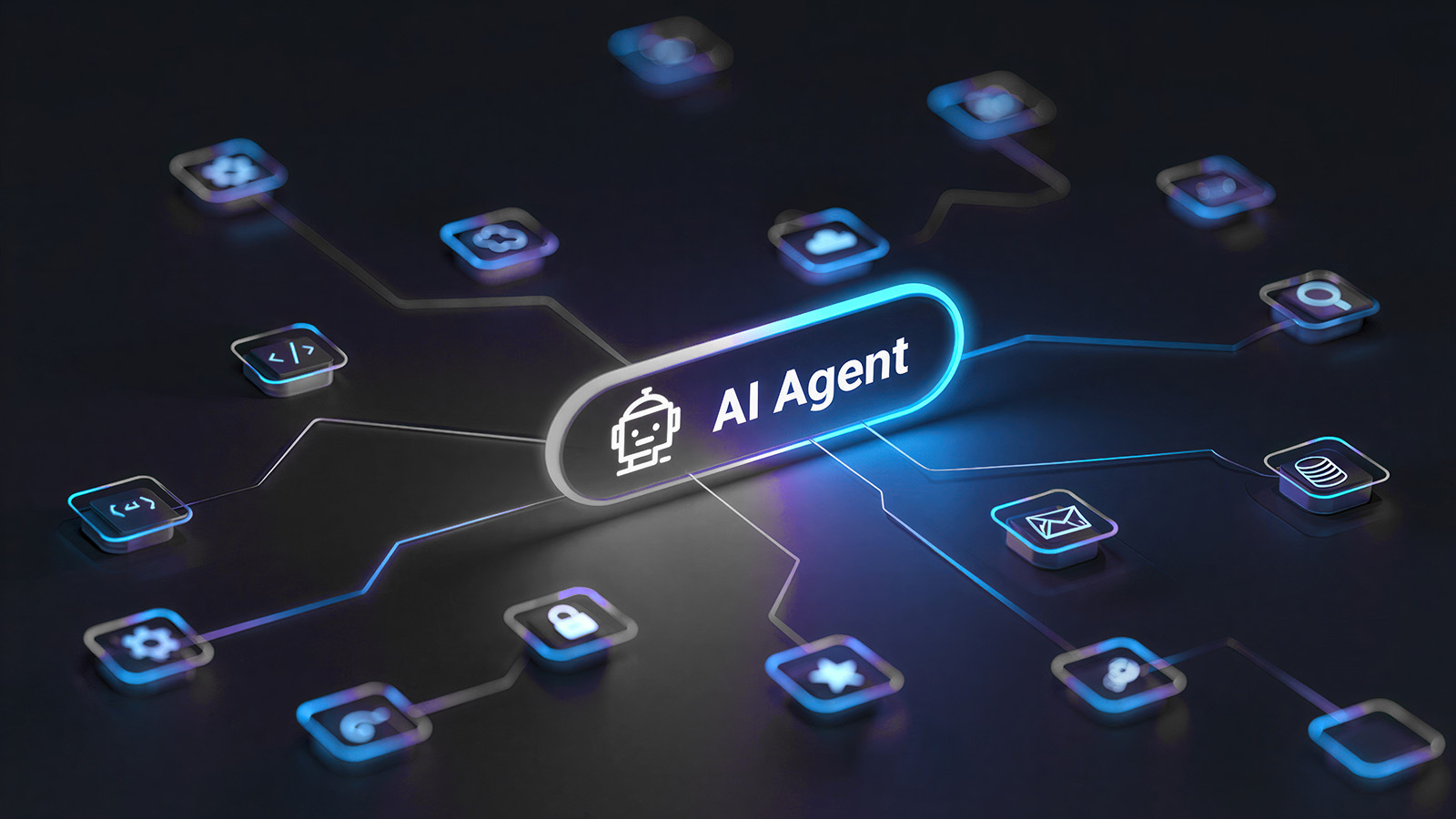
AI agents become a security concern when they can act. The practical control point is the boundary around their identity, tools, data, and network access.
The risk begins with agency
A model can suggest. An agent can call a tool, query a system, write a record, or trigger a workflow. That ability to act changes the security question from whether the model is safe to whether the operating boundary around it is controlled.
Prompt filtering still matters, but it cannot carry the full burden. The agent's identity, permissions, approved tools, data access, and outbound connections determine what a compromised or misdirected agent can actually do.
Build a containment boundary
Give every agent a distinct identity and the least privilege required for its task. Separate development and production access, govern tool connections, restrict network egress, and require human approval for actions with financial, legal, security, or customer impact.
Treat tool protocols and connectors as part of the application supply chain. Inventory them, validate their source, constrain their scope, and log every meaningful action in a form security and operations teams can investigate.
Move faster with better boundaries
Strong containment does not have to slow experimentation. It creates a reusable path from prototype to production because teams know which controls must follow the agent as its reach expands.
The goal is practical: assume the model can be manipulated, then make sure the surrounding system limits impact, preserves evidence, and supports rapid recovery.